

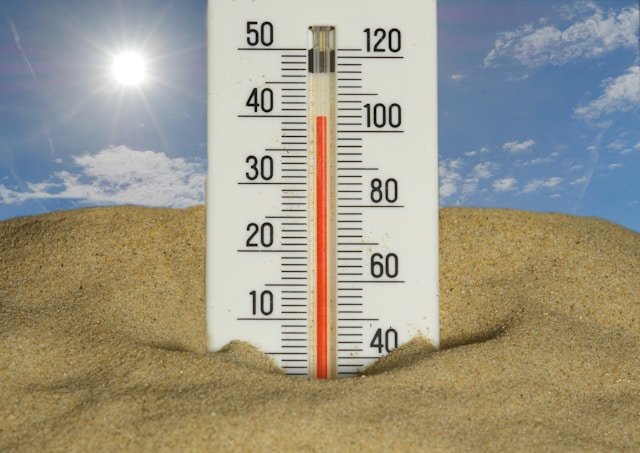
The National Weather Service’s extreme heat warning for the Las Vegas Valley runs until 8 p.m. Sunday, with highs of 107 to 110 degrees across the valley and up to 118 degrees in Death Valley and the lower Colorado River Valley. It is the latest in a summer of repeated extreme heat warnings across Southern Nevada, and it arrives while Clark County’s two official heat death counts, neither refreshed in more than three weeks, sit about 30 deaths apart on what they say.
Two Counts, One County
The number most Las Vegans have seen is 46. That is the total the Clark County Office of the Coroner/Medical Examiner reported on July 30, 41 deaths with details on file and five still pending notification of next of kin. News3LV’s version of the same coroner release put the confirmed-to-pending split identically at 41 and 5. Victims ranged from age 28 to 84, the average was 59, 12 were homeless and 20 involved drugs or alcohol, according to the Review-Journal’s report on the release.
The other number belongs to the Southern Nevada Health District, which runs its own surveillance system separate from the coroner’s office. Its most recent monthly report, dated July 19, puts the confirmed 2026 total at 16, three deaths classified as heat caused and 13 as heat related, spread across March through July.
The health district’s own report explains the gap in writing: “Death totals are based on registered death records in the Nevada Electronic Death Registry System and may differ from preliminary data reported by the Clark County Office of the Coroner/Medical Examiner (CCOCME).”
Forty six against 16 is not a rounding difference. It is nearly three times as many deaths in the number the public has actually seen reported. Independently dividing the two totals puts the coroner’s preliminary count at 2.9 times the health district’s confirmed count, even though the coroner figure is measured 11 days later in the season, which if anything should narrow the gap rather than widen it.
Why the Two Offices Don’t Agree
The health district’s case definition is narrow by design. A death only counts if the Nevada Electronic Death Registry System assigns it an ICD-10 code of T67 (effects of heat) or X30 (exposure to excessive natural heat), the codes a physician or medical examiner formally enters on a death certificate after a full review.
The coroner’s office moves faster and casts a wider net, flagging a death as heat related whenever heat appears to have been a contributing factor, including cases still awaiting toxicology results or family notification, which is why the office’s own releases describe most of their tally as “confirmed” while leaving several cases “pending.”
Contributing factors the coroner’s office cites for the 2026 cases include cardiovascular disease, fentanyl use, physical exertion, inappropriate clothing, lack of acclimatization and inadequate fluid intake, according to Clark County spokesperson Stephanie Wheatley. Several of those same factors can also apply to deaths that are ultimately certified without a heat-specific ICD-10 code, which is one reason the two totals diverge rather than converge as cases close.
| Metric | Clark County Coroner (preliminary) | Southern Nevada Health District (confirmed) |
|---|---|---|
| 2026 year to date total | 46 | 16 |
| As of | July 30, 2026 | July 19, 2026 |
| Status breakdown | 41 detailed, 5 pending notification | 3 heat caused, 13 heat related |
| Case standard | Heat flagged as a contributing factor | ICD-10 code T67 or X30 on death certificate |
| Most recent public update | 24 days before publication | 35 days before publication |
A Slower Year, By the Count That Tracks It Closest
Compare the health district’s own numbers year over year, and 2026 is running behind, not ahead. Its July 2025 report, dated July 14 of that year, showed 20 confirmed deaths.
This year’s July report, dated five days later in the season on July 19, shows 16, four fewer despite the later measurement date. Independently calculated, that is a 20 percent decline in the confirmed count at essentially the same point in the summer.
The longer trend points the same direction. The health district’s final 2025 report recorded 284 confirmed heat associated deaths for the full year, down from 513 in 2024, Las Vegas’ deadliest heat season on record.
Independently dividing those figures, 2025’s total was 44.6 percent below 2024’s, in line with the health district’s own description of the change as a 45 percent decrease.
One number is not slowing down. The health district’s emergency department tally, drawn from hospitals across the valley, stood at 1,805 heat related illness visits as of July 19 this year.
Last year’s equivalent report did not reach a comparable total, 1,806 visits, until August 13, about three and a half weeks later in the season. Deaths confirmed under the strict case definition are down. Emergency rooms are filling up on roughly the same schedule, or faster.
The Gap Nobody Has Updated
Neither office has published a new count since this heat warning began. The coroner’s most recent public tally is the July 30 release putting the total at 46. The health district’s is the July 19 monthly report showing 16.
Last year, by comparison, the health district had already published its August update by August 13, meaning this year’s next monthly report is now overdue relative to that pace, even as Sunday’s warning keeps the Las Vegas Valley under its latest extreme heat advisory of the summer.
None of this means the heat is not dangerous. The National Weather Service warned Saturday that “heat-related illnesses increase significantly during extreme heat events” and cautioned that car interiors “will reach lethal temperatures in a matter of minutes,” urging residents to stay hydrated, remain in air conditioning when possible and never leave children or pets unattended in vehicles.
What it means is that the two numbers Clark County residents are most likely to see this week, whichever one a headline happens to use, are measuring different things, on different clocks, and neither has caught up to today’s warning.
Figures in this article reflect data available as of August 23, 2026. The coroner’s most recent public heat death tally was released July 30, 2026. The Southern Nevada Health District’s most recent monthly surveillance report is dated July 19, 2026.